TARYN L MEAD
-ARTIST-SCHOLAR-EDUCATOR-
01 about
After many years of scholarship and practice at the nexus of nature-inspired design and innovation in the context of business, my current explorations of the human-nature relationship are shifting towards more sensorial ways of knowing our role in ecological systems. My work situates wildness as an animating force of the human experience, grounded in the belief that design is a relational and ecologically-entangled practice that emerges through close engagement with place, materials, and lived sensorial experience.
Rather than seeing design as a problem-solving tool, I use it as a way of paying attention - of listening to environments, materials, and systems, and of understanding how they shape and are shaped by human action. This phase of my career is a deeply personal inquiry into the species that sustain my entangled self - physically, socially, emotionally, and spiritually. Through making, I seek to reveal relationships between diverse species, natural cycles, and the human social and evolutionary experiences.
02 portfolio | creative
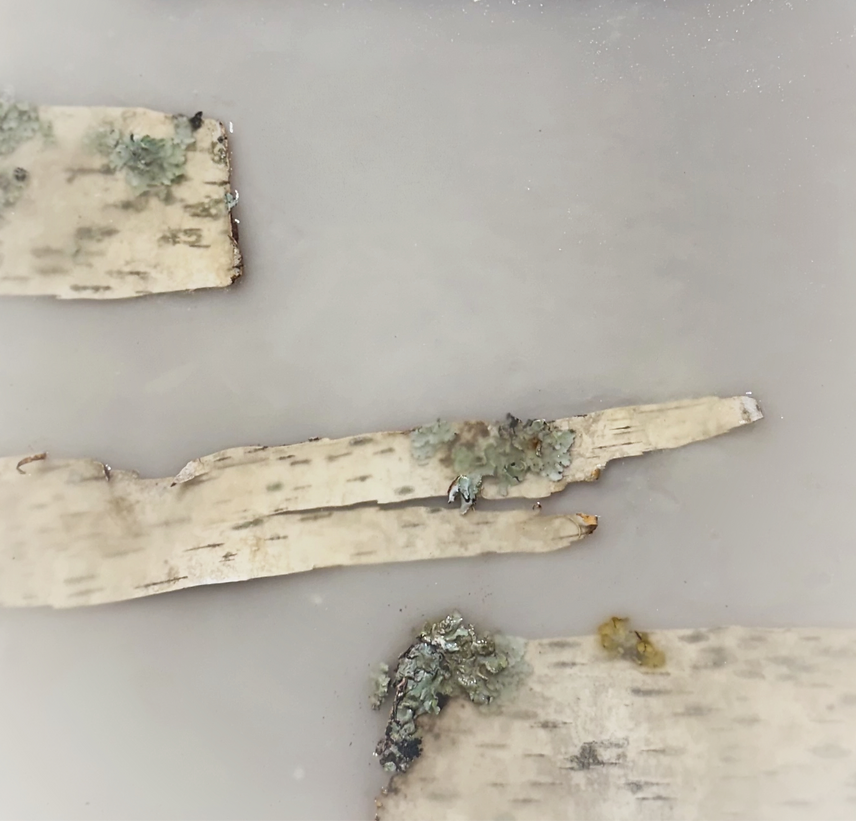
Biodesign is the core process of my creative practice, through which I work with living systems, biological processes, and organic matter, treating nature as a collaborator in sensemaking rather than a resource. My approach is exploratory and iterative, allowing materials to transform, grow, and respond through experimentation. I primarily work with biomaterials derived from biological sources, especially those made with gelatin, glycerine, sodium alginate, bacterial cellulose, and cornstarch. These materials are produced through low-tech, hands-on processes: gelatin and glycerine form flexible bioplastics, sodium alginate (derived from seaweed) sets into gels or films, and cornstarch can be combined into biodegradable plastics with varying strength and opacity. Together, these approaches and materials foreground tactility, impermanence, and material agency, shaping my practice as one rooted in responsibility and responsiveness to place.


03 portfolio | academic
CURRICULUM VITAE (LINKED PDF)
RESEARCH STATEMENT
My research explores how materials, products, spaces, and systems can be designed in ways that support regenerative relationships between humans and ecosystems. Grounded in an understanding of design as a relational and ecologically entangled practice, I draw on nature-inspired approaches such as biomimicry, biodesign, biophilic and regenerative design, and circular economy frameworks as ways of learning from living systems rather than optimizing them. I am particularly interested in bioregional scales of design and rural ways of knowing, where local ecologies, materials, and cultural practices inform responsive and place-based design strategies. I engage with epistemological and ontological questions to examine how ways of knowing shape design outcomes, using design research to develop cultural narratives and practices that foster reciprocity, interdependence, and integrated human and ecological flourishing. For a complete list of scholarly publications, please see my profile on Google Scholar or Academia.edu.
TEACHING PHILOSOPHY
As an Assistant Professor of Sustainable Design, I teach across studio-based and theory courses focused on basic design skills, nature-inspired design, circular design, and biodesign with a strong emphasis on ecological literacy. I am particularly interested in how designers come to understand environmental complexity not as abstract information, but as embodied knowledge that informs ethical and material decisions. My pedagogical approach prioritizes place-based ways of knowing, encouraging students to learn from local landscapes, biological processes, and cultural practices as sources of design intelligence. I encourage students to develop their own sense of place and belonging within interconnected ecological and social systems through their educational journey. Alongside my creative practice, I explore how design pedagogy can support broader socioecological transitions by moving beyond solutionism toward systems thinking, embracing uncertainty, and imagining possible ecologically embedded futures.